Games have become part of everyday life

On the cusp of summer in 2011, Kakao was busy looking for a successor of KakaoTalk, another 'ecosystem.' It was almost by then when Kakao started planning Plus Friend (currently, Talk Channel), KakaoStory, and other services that could leverage KakaoTalk chats and profiles.
KakaoTalk Gift, introduced earlier at the end of the year, was performing well but not enough to handle the explosive increase of KakaoTalk users toward 20 million. Kakao was running out of 'rocket fuel' and in dire need of ensuring a solid business model.
Tod remembered that time, "JB, then CEO and Head of New Business Department, and other Krews was deeply occupied with searching for new items."

# Mobile game, a minority in the market
In the summer and throughout the fall, the game business was one of the candidate items for a feasibility review. Social network-based or feature phone-based online games were obtaining favorable responses in the overseas market such as North-America and Japan. Some early adaptors among Krews were having fun at Facebook's social network games. In the meantime, many game companies that Kakao had met for business review paid great attention to increasing their users by utilizing KakaoTalk friends. No one had mapped out a specific plan. However, they all agreed that the PC environment could not compare to the simplicity of the mobile environment's verification process and user communication.
Kakao had some Krews full into the game business, including Brian, the founder of Kakao. However, major game companies wielding the absolute market power doubted Kakao's capability to push forward the business. By the end of summer, Kakao took its course of licensing the game business-related rights, taking account into various circumstances, including operation resources.
Kakao sounded out many game companies to make a deal, but it seemed least likely to reduce the opinion gap. Toby said, "We explained our business model to investors in Korea, and even more overseas, but only to share a low bond of sympathy on mobile social games. We couldn't find anyone willing to invest as much as we needed to develop a novel game."
Meanwhile, WeMade Entertainment, then the middle-grade game company, came forward as an investor. It empathized with Kakao's prediction that the mobile environment would dramatically transform the game industry that had been long-bound to the PC environment. After the partnership announcement that the two companies would boldly go where no one had gone before, investments started to stream in. By dint of such market expectation, Kakao could change direction to set out the game business firsthand. Around the fall of 2011, the company started to add recruits to their gaming expert line-ups.
#Twists and turns, and then launchCompanies equipped with capital and human resources pushed their way forward while Kakao was testing the waters. Daum Communications rendering messenger and portal services established a partnership with major Korean and Japanese game companies and then introduced platforms in a row. Technically, there was no issue of implementing user verification; however, its platforms lacked networking effects that were essential to mobile games' success. Then, the Kakao gaming TF of ten Krews set out the launch of mobile gaming service, making the most of a chance while their competitors were faltering.
Kakao was on a roll with its flagship messenger platform, but market expectations were still low about its mobile games.
Everyone in the market shared a prediction that mobile network would open up new opportunities. However, PC games were still influential, and no major gaming companies promised to provide content to Kakao, whose operational capabilities had yet been proven.

"We barely prepared the service launch by 'imploring seven companies for' ten games. We know nothing about what mobile social game was, nor did gaming companies. We should somehow persuade them to simply link Kakao Social Login to their games and see if what would happen. In doing so, we could sign a contract," Tod recalled.
The TF Krews were all gloomy for more than a week, even after the launch on July 30, 2012. No game was making it 'big.' And Tod admitted in an emergency meeting, "I guess we're screwed." Tobi recalled that moment, saying, "The TF Krews, including JB, was in a big worry and gloomy due to the underperforming service. Major game companies simply didn't enter our platform, or not improbably for other reasons?" All inside and outside of Kakao was then focused on KakaoStory that advanced unresisted to surpass 20 million users.
The somber note didn't last long. By the 9th day of the launch, most of the entered games put their names on the popularity list, and some anomalies were spotted in Anypang's API authentication server on August 13. Finally, the 'Hearts' sent by users filled up the chatrooms and Anypang topped the list of free Android apps on August 18. The reaction was literally explosive, and Kakao decided to allow Sunday Toz, the developing vendor, to rent an emergency server during the weekend. Unlike other conventional games with general anonymity and limited network effects, KakaoGames was embossed with its unique user experience. Its users could enjoy games with real friends while exchanging gifts during a game.

Games from small vendors continued to jump onto the popularity list. Dragon Flight, made by a one-person vendor, hit the 'jackpot' with daily revenue of over 2 billion KRW, which was received quite symbolic by the industry. We could guess how immensely shocked the sector was to consider that the proof level for top-tier PC games, made with enormous resources, was a monthly revenue of 10 billion KRW. Kakao had to 'persuade partners to enter its platform' a few months ago, but it soon was at 'reviewing end' for a long line of games.
# Gazes From Inside and OutsideIn the second half of 2012, KakaoGames started to present completely different methods in an invincible online-PC-game-centered market. People who had nothing to do with games limped into the game world. We wondered how much changed the viewpoint of the game industry was. We asked Tyler and Terry who joined Kakao in that fall and winter, respectively.

Here's Tyler's account. "I joined the company to support technical assistance, including account sync. I didn't recognize Kakao had been preparing for game business until people sent hearts by ones and twos and, Anypang finally created a boom. I had worked for long in the game industry, but I didn't even imagine that I would work for Kakao."
The same was true for Terry, who used to work as a game planner for many years. "I had a job interview in the fall when Anypang was the craze sweeping the country and finally joined Kakao in December. But my colleagues in the game industry advised me not to transfer to Kakao. They all showed skeptical responses against Kakao, saying, 'How successful Kakao could be in this fixed market?' I just gave it a shot with a thought that I might have to apply for other business if things didn't work out in the game business."
Gazes from inside and outside sharply changed by the year 2013. If a single user invited ten friends, then it immediately led to 10 inviting 100. That exponential rate entirely changed Kakao's financial statements. The company enjoyed record sales of 21.08 billion KRW and operating profits of 6.8 billion KRW in 2013, which were 3.5 times and 8.5 times surges, year-on-year, respectively. Once again, Kakao proved its substantive force and huge 'platform effect.' The industry started to revalue the game business and Kakao across the board. That point was roughly when Kakao finally gained a firm foothold and became self-perpetuating to take on another challenge.

Kakao Games popularized mobile games by achieving dramatic, tangible results from undefinable, unprecedented opportunity. As a result, the Korean game industry moved into an epoch of grand transformation in 15 years. Reports indicated that the average gaming population in Korea was estimated as 5 million by early 2010, but it increased to 20 million after the 'Kakao Games.'
The ecosystem began to change. A series of inceptions followed under the stimulus of small-and-medium-sized gaming companies' phenomenal successes. The conventional majors swiftly joined the mobile gaming market based on established capital and expertise. With talents and funds swamped in, the gaming industry was burgeoning, and game genres were diversified to render users various options.

Kakao Games was well-received as a 'highly trusted label' among gaming companies. While majors and boutiques are running neck and neck, Kakao introduces the 'quarter system' imposing the application limit per company to prevent cut-throat competition and encourage fair competition. By this time, majors started to strengthen their platforms or seek a strategic partnership with mobile platforms other than Kakao. They judged that Kakao Games was more than a mere partner since it had risen to the top within less than a year.
Overheated hype caused side effects. Users became more and more tired with links with profile-based social games, the very success factor behind the growth of 'Kakao Games.' As 10 million downloads games appeared in a row, Kakao got to reinforce its operational policy to restrict social messages. In the meantime, Kakao Game's ecosystem, where the casual genre had held sway since 'Kakao Monster Tamer' (August 2013) by Netmarble, was reorganized around mid and hardcore genres.
Major gaming companies equipped with technological and financial power once again took the high ground in the mobile social game sector. In the end, the so-called 'De-Kakao' phenomenon appeared in 2014. 'Kakao Games' ended up keenly realizing the necessity of revamping its fundamental structure.
After experiencing its first dramatic success and ensuing drawback, Kakao prepared for a new start from the following year, 2015. The company scouted Hoon Namgung, then CEO of NZIN and a prominent figure in the game industry, as the Vice President of Kakao Games. He started to reorganize its business structure. Beginning with the commission system and partner policy's flexibilization, Kakao spurred radical transformation into 'game publisher' in 2016. At last, it started sailing as Kakao Games by merging Daum Game, its subsidiary, and NZIN and spinning off the game department. Since then, based on the 'for Kakao' experience, Kakao has opened up the era of 'by Kakao' through IPO in September 2020. Finally, the intro of Act 2 by Kakao Games begins under the vision 'Games become a daily routine.'
# RetrospectionAsked about their impression at the end of the interview, the early members contributing to the start and growth of Kakao Games answered,
"We can't discuss 'mobile game' without mentioning Kakao in Korea. Kakao is the only platform where users can text any friends while gaming. Still, there are quite many who are enjoying Dragon Flight or Anypang. The novel idea of server-free mobile games enabled small-and-medium-sized gaming companies to become more and more abundant."_ Tylor
"Don't you think that it made a big appeal to allow users to express the message 'Let's play this game together' with hearts? I guess this intuitive and emotional expression was all possible because it was Kakao." _ Tobi
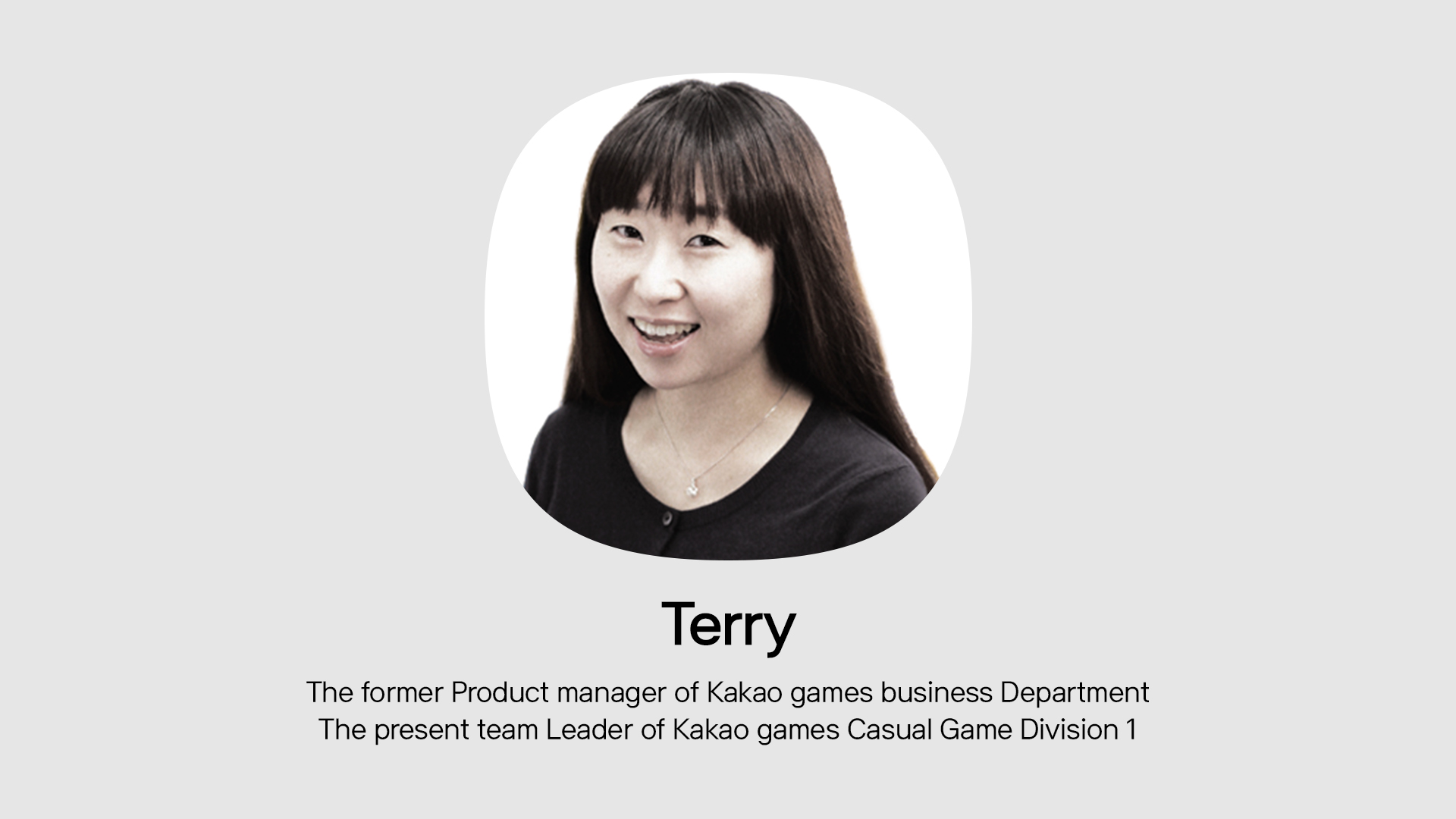
"People counted 'Go-Stop' as 'The Nation's Game.' However, Kakao Games reshaped the gaming landscape by introducing many hilarious games that were easy to slip into, even for grandmas and moms. I think making everyone laugh means a lot. The gaming market becomes more and more competitive than in the early days, so it's hard to roll out a low-budget national game. Still, I look forward to the day when 'another nation's game appears once again.'"_Terry
"Don't you think that some themes that could rock the world will emerge again just like back then, we shook up the fixed gaming industry and created a whole new gaming world? No one knows when and what will it be, but I expect Kakao to make a difference once again." _ Tod
What is most valued and what we should make valuable are all converged in Kakao's DNA "To boldly go where no man has gone before."