With the bank code 90, Kakao opens up bank branches on everyone's smartphone.

Nothing changes if no one asks a question. In everyday life, we throw the question, 'Why should we do this?' The 'first penguins' that courageously jump into the ocean change our world little by little.
'Should there be a bank window?' 'Is the official certificate an essential security measure?' 'Can banks not pursue 100% mobile?'
These questions that might have sounded absurd only a few years ago became a reality in mid-2015. That's because mobile infrastructure has spread rapidly so that over 90% of the population under the 50s used a smartphone. Various services and devices were vying for higher convenience and performance, and the topic 'FinTech' emerged as a real issue. Consensus about the need for financial innovation also increased.
Although pursued twice in 2001 and 2008 only to fail, the discussion over establishing Internet-Primary Bank retook place. On June 18, 2015, the government announced that it would allow innovative management entities to ▲enter the banking industry to enhance consumer convenience, ▲promote competition in the banking industry, and ▲create new growth engines.
#Leading the consortium
At that time, Kakao was looking for a new challenge after completing PMI (Post-Merger Integration: the organizational convergence process for maximizing the merger effect). Daniel, who had experience in Daum Communications and insurance companies, brought up a plan at the management meeting.
"Recently, the Financial Services Commission announced a plan to introduce a specialized Internet bank. I suggest we should try it."

'Why should we do it?' A negative vibe was dominating rather than an upbeat note. That was because of the question, "Can Kakao pick up speed in the finance sector, a representative license industry? Moreover, in the banking sector, one of the highest regulatory businesses?" The fact that KakaoPay, which had been launched earlier, moved toward 5 million users while promoting payment innovation had Krews waver in determination.
Daniel started persuading from a different perspective. He stressed that there were few opportunities to challenge the licensed business; thus, if Kakao ran a bank in the 'primary financial sector,' it would be advantageous to connect with other financial and non-financial businesses. There were fewer reasons for 'not doing' than for 'must do.' Accordingly, Kakao established the 'Mobile Bank TF.'
No wonder fierce competition for preliminary approval was expected as it was about to create a new bank in 23 years after the establishment of Pyeong-Hwa Bank in 1992.
Here's Daniel's account. "We pondered over and over again before organizing consortium. We crisscrossed the country to engage companies in the financial industry that Kakao had never experienced before and companies that could help us expand into life-infrastructure. An advisory professor shared an example of his experience while spending a sabbatical in the United States. In Korea, he had a smooth financial life thanks to his high creditworthiness, but there was no data on his economic activity in the United States. So it was difficult to issue a credit card. At that very moment, the records of purchasing academic and professional books on Amazon provided clues to resolving the situation. Thinking that this was a new value existing banks couldn't provide, we invited major players from each industry as shareholders."
With 50% capital investment by Korea Investment Financial Group, the KakaoBank Consortium was formed in August 2015, in which Kakao, KB Kookmin Bank, SGI Seoul Guarantee, Post Office, Netmarle, eBay, Sky Blue (Tencent), and YES24 participated.
#Reinterpretation of banking business
On October 1, the KakaoBank Consortium was kicked off by submitting the preliminary approval application form. While preparing the business plan, it focused the most on 'reinterpreting the banking business.' To this end, Krews first identified what inconveniences consumers took for granted since they had been chronicled for a long time.
'Should I visit the bank window between 09:00~16:00?' 'Isn't it too wasteful if I have to take a half-day to wait at the bank window?' 'Isn't there a simpler and stronger security measure than the official certificate?' All these questions ran through our minds on a continual loop, and eventually, we got to be on the same track. We pursued 'digital money box' attached to our life, not a conventional bank distanced from everyday life. Krews gathered all the questions raised while discussing and identifying the essence of KakaoBank.
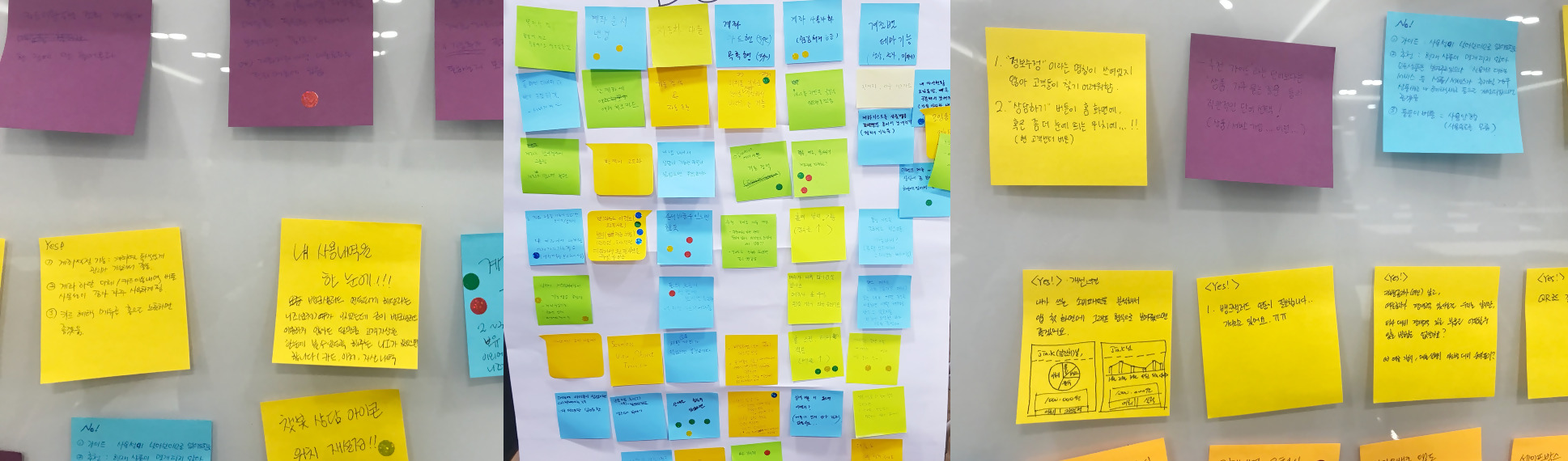

There was also the urgency behind this reinterpretation and identification because Kakao had to deal with existing banks, which were strong competitors in terms of capital, human resources, sales force, and work experience. Daniel said, "We had to derive competitive edge and differentiating factors in that 'we resolve problems,' while existing banks sell product or service.' We had to promote the app without a single bank branch. The thought feared us all that the app could not survive if money box's usefulness or innovation fell short of expectations."

On November 29, two companies obtained preliminary licenses. As of 2015, 20 Internet-only banks were doing business in the U.S, 20 in Europe, and 8 in Japan. China had just approved two operators. All eyes were on how different Korea's first Internet-only bank would be since it started as long as 20 years later.
#The 14-month journey
After obtaining preliminary approval, KakaoBank Consortium immediately dived into the process of incorporation to get the final authorization. In January of the following year, executives of the participant companies shared a state of progress, followed by approving the articles of association, holding a board of directors, registering a corporation, and then business. The new company had a mountain of work to do in terms of scouting talent, preparing groupware, establishing an HR system and by-laws, and appointing inspectors.
Technological preparations for 100% mobile bank, not Internet bank, were also carried out. There was no legacy to benchmark as they started from scratch. Literally, the 'legacy was zero.' The planners and developers immersed themselves in the creation like composers who stopped listening to music for fear of plagiarism while composing a new song.
"App download would be a major barrier for an average mobile business company. Once installed, it should not be difficult to use. However, after downloading the bank app, users often fall at various hurdles as they take out identification cards, confirm terms and conditions, and go through other irritating steps. We repeatedly examine all these adversities to resolve so that users can smoothly deal with the relevant process on the handspan screen." That is Daniel's remembrance.
Krews broke down all the procedures taken for granted in mobile banking and re-stacked them one by one from the beginning. 'If users entered the app after passing several authentications, should they continue to enter a password every time they run the service?' 'How about using reverse-transfer for non-face-to-face real-name verification?' Big and small ideas came out. Krews were most wary of self-contentment that 'this one was better than existing banking apps.'

"Such attitude is also observed in KakaoBank's development culture. Unlike ordinary banks where subsidiaries or vendors carry out assignments, KakaoBank's developers are given full discretion based on their respective technical capabilities. They think more about making a better system. That's because the results of trying not to make a ruin and trying to make a masterpiece are stark different. Krews wanted to create a masterpiece that they could honorably hand over to a new code fitting the future technology trend," said JK, who has been working as a developer since the early stage.
Starting from zero, developers who account for 40% of Krews realize KakaoBank's unique and fundamental differentiation. They possess particular intangible assets: confidence that they can produce better results than existing financial companies, even with open source, Linux, or x86, and internalization that they've experienced while identifying intent and reason behind a design and resolving various issues.
JK predicted, "It is impossible to predict which form factor will emerge following PC-based Internet banking and then mobile banking that has become a trend since the advent of smartphones. However, KakaoBank will respond fastest and most flexible in the financial field, no matter what changes occur."
# No problems with us having a meeting in shorts...
When describing KakaoBank, its 'corporate culture' is an element that should not be left out. It has already been widely known that after moving over to KakaoBank, bankers who used to get to work in 'full suits' every morning were surprised to see all Krews in hoodies and sneakers.
The short scenes that Krews easily communicate, calling each other by English names without a position grade or quickly move between desks with their kickboard, also show the horizontal corporate culture of 'Kakao-origin.' One may expect that this atmosphere will be consciously filtered when Krews visit external organizations or administrative authorities come to the Kakao office. However, that was not the case with KakaoBank. In July 2016, when Krews met with their counterparts at the Bank of Korea and August when the Chairman of Financial Services Commission came to the preliminary KakaoBank headquarters, the 'Cool Biz' dress code in summer became a hot topic. Krews take it for granted that KakaoBank has no 'corner office' for executives that most companies have.
This corporate culture was requisite and cause, not effect. When people with different backgrounds such as the Internet, mobile, banking, and many others gathered to create unprecedented businesses, layer upon layer, they needed to share, conflict, dedicate and build up trust therefrom. Services that are not authoritative to users were born out of everyday life.
# Skyrocketing without tie-in nor membership inducement
On April 5, 2017, KakaoBank obtained the final authorization after three months of the accreditation process. Finally, KakaoBank Korea came out to the world with the bank code 90 (and it changed its corporate name to KakaoBank Corp in June 2020). Ahead of the official release, Krews operated the closed beta service for 1,600 employees of the related parties and shareholders. Tensions mounted among stakeholders regarding how their efforts to create 'something from nothing' would be received in the market.
First of all, users had two reactions: they were surprised to realize that they needed no official certificate and then responded in the forlorn regret, 'Why has no one tried this possible thing?' The speed of opening a bank account was the very part on which all stakeholders were upbeat. On average, it took 7 minutes to create a new bank account non-face-to-face. For the tech-savvy, it took only 2 minutes, and even for the 50s, 10 minutes at the most. Daniel said, "If you put all the banking apps together and run them at the same time, you can see how excellent the KakaoBank app is as a pure native app. The younger you are, the better you feel about the app. Users would have felt strongly that our app was markedly different from others since it was the time when most mobile banking apps were quite different from what they are today."
On July 27, 2017, KakaoBank finally came into the world 23 months after the consortium was kicked off. The power of 'digital moneybox' exceeded all expectations. Three hundred thousand people opened accounts within one day after the service launch. This figure was reached in 45 days for the Internet-only bank that started earlier than KakaoBank. By the 13th day, the number of people who opened an account had exceeded 2 million. The future vision was mirrored in the condensed beads of sweat on Krews' brows.

Traffic literally skyrocketed, which was no laughing matter. KakaoBank had to increase its capital only a single week after its opening because the loan application exceeded the expected value. It took almost one month to grab a check card with Kakao Friends characters printed in one's hand. Some devalued this phenomenon as a "typhoon in a teacup," driven by favorable feelings for the Kakao brand and curiosity for the brand-new service. Others predicted infinite possibilities, elaborating that 'Ka-Bang' was not an abbreviation for KakaoBank, but 'Big Bang by KakaoBank.' As of now, three years and six months after the launch, the interim evaluations are converging on 'Big Bang.'
What has been consistently observed is that most innovations were created by persistent willingness to improve, not newness as a goal, which is well reflected on the KakaoBank's previous trajectory such as chatbot assistant, 26-week installment savings, community bankbook, mid-interest rate loan, KakaoBank mini, etc. These results from 'reinterpreting the banking business' reduce 'pain points' and satisfy usefulness and convenience without wasting resources. All these achievements have been made without 'tie-in' nor membership inducement.

#Banking over the bank, transaction over profit
For seniors in their 50s or older, a bank was the 'place where they keep money safe.' In contrast, younger generations adapting themselves to the digital environment stress utilizing their 'moneybox.' After KakaoBank appeared, a 'convenient moneybox' is becoming the standard for evaluating banks across generations.
As of later 2020, 13.6 million people, or half of the economically active population in Korea, opened an account at KakaoBank. If we add up the number of people who have no account but indirectly experienced KakaoBank via KakaoBank mini, community bankbook, and My Credit Information, the figure reaches almost a 15.4 million. The proliferation trend in the 50s seems far steeper than other age groups, which can be interpreted in the same context as the seniors led the smartphone market's mid-to-late growth.
KakaoBank's most significant achievement through this trend is its confidence in the platform business. New services such as loan arrangements connecting a customer whose credit rating is relatively high but credit loan applications were rejected to nonmonetary institutions, non-face-to-face securities account establishment, and 'banking commerce' in collaboration with life-style companies has become an unprecedented 'standard' in the banking industry. After the service launch, it became much easier to identify the users' pain points. Relevant data has been accumulating exponentially.
Even surprising inventions become ordinary after several years. Some of the amazements KakaoBank presented have already become 'yawny routines.' However, Daniel's presentation on the direction of KakaoBank's innovation at the Press Talk (press conference) held on February 2 hinted to us that the newness would come unknowingly.
"It will be difficult for customers to notice what and how technology was applied by intuition. You may feel that the app is only 'convenient,' or 'fast.' Isn't that convenience felt at your fingertips a real measure of financial innovation?"
The new age where banking is over the bank, and transaction over profit, is in full swing.
- Life Bank beyond bank,
Kakao Bank. #bank#kakaobank
